The drive to Silver City is not for the fainthearted. It is a 20-mile-long drive on a one lane dirt road full of switchbacks, deep ruts, and in some places just barely clings to the side of a mountain. There are two routes to Silver City. From Caldwell you can go south on highway 78 to Murphy, then for another 5 miles until you right on Silver City Road.
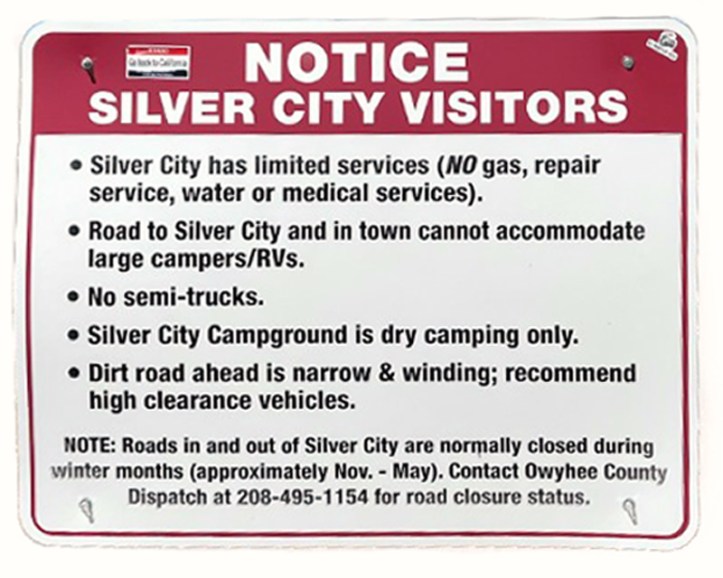
As soon as you turn off highway 78 you are greeted with this warning sign. The road starts out straight and flat, but soon enough you begin the climb up and over the Owyhee Mountain Range. The road is not very well maintained.
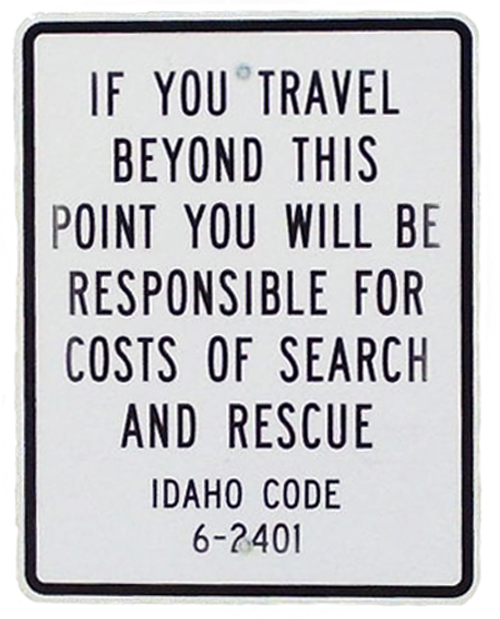
The the previous sign is not enough to discourage you, perhaps this one would. Silver City Road traverses over a mountain pass almost 6700 feet high, and there are plenty of opportunities for you and your vehicle to veer off the road and tumble down into one of the many deep canyons that you will encounter.
The other route to Silver City starts in Jordan Valley, Oregon. This is a 25-mile-long journey on a narrow dirt road, but for the most part in follows a river to it is not as treacherous as the route from Murphy. Silver City is not completely abandoned. During the summer months there is a restaurant and hotel maintained for the more adventurous visitors. Many of them arrive on an ATV. In any case, be prepared to meet an oncoming vehicle. This happened to me when I met two oncoming Jeeps. Experienced driver do not see this as a problem, but as an exciting challenge. We managed to pass each other, at an extremely slow pace, with about one inch between or vehicles.
The saga of Silver City begins in 1863 when a group of men known as the Jordan Party were searching the Owyhee Mountains for the fabled Blue Bucket Mine, supposedly located in Oregon. However, the guys mistakenly believed they were in Oregon when they were actually in the Idaho Territory, so they never found the mine. However, as luck would have it, they instead discovered gold nuggets in a creek bed, sparking a minor gold rush. Miners were able to pan for gold for only about a year before the gold that could be recovered from the stream bed ran out. The following year large deposits of ore containing silver were discovered on the slopes of nearby War Eagle Mountain. This led to renewed interest in the area and set off the mining boom and the formal establishment of Silver City.
Several mining claims were located just above Silver City on War Eagle Mountain, including one operated as the Hays and Ray Mine. A newcomer to the area, D.C. Bryan, discovered another outcrop of silver on War Eagle Mountain. He filed a claim and named his mine Poorman, but there was a problem. His claim was located right next to the pre-existing claim of Hays and Ray. The owners of Hays and Ray believed (correctly) that the silver ore vein under Poorman was actually part of the vein under their claim. The dispute became violent in September 1865 when these miners actually began shooting at each other. The Poorman miners even built a log fort above the entrance to their mine for defense. A court battle ensued, but both sides refused to budge. After six days the court ruled in favor of the Hays and Ray, forcing the Poorman to shut down, but only after the Poorman miners had dug $500,000 worth of ore from the Hays and Ray vein during those six days.
For Silver City, the worst was yet to come. In 1868, another dispute arose between two other mines, the Golden Chariot and the Ida Elmore. An underground battle erupted when miners from each side started shooting at each other deep in the tunnels. Two miners were killed, and many more were injured by the heavy gunfire. The situation worsened when both sides hired gunmen, further escalating the violence that lasted for three days. At least one hundred armed men occupied the tunnels. The sheriff was powerless to stop it, so Governor Ballard sent a deputy marshal with an order demanding that the fighting stop or else he would send in military troops. The order did not work and the fighting continued. The governor made good on his threat and sent in ninety-five soldiers with a cannon to occupy the city, but even then it took four more days for the violence to stop.
All photos of Silver City were taken by me.
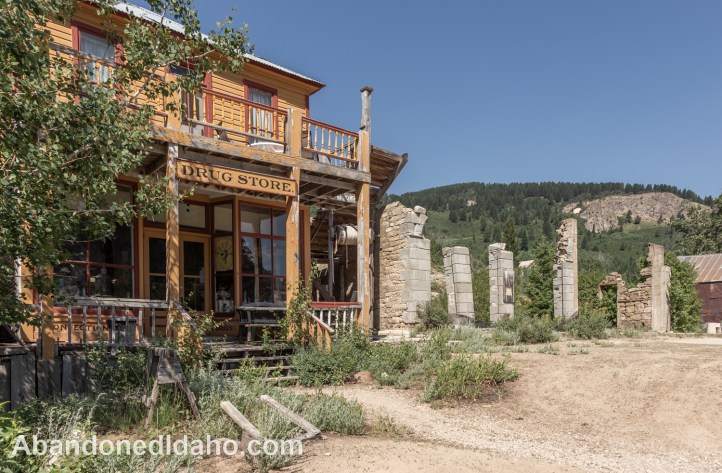
Even though it is abandoned, the drug store/post office is still in relatively good condition, while not much remains of the former courthouse to its right except for a few stone pillars.

This is the back side of the butcher shop shown in the previous photo. Most likely the building had a room at the rear that served as living quarters for the business owner. You can see the steel braces on the side of the building to help prevent it from collapsing.
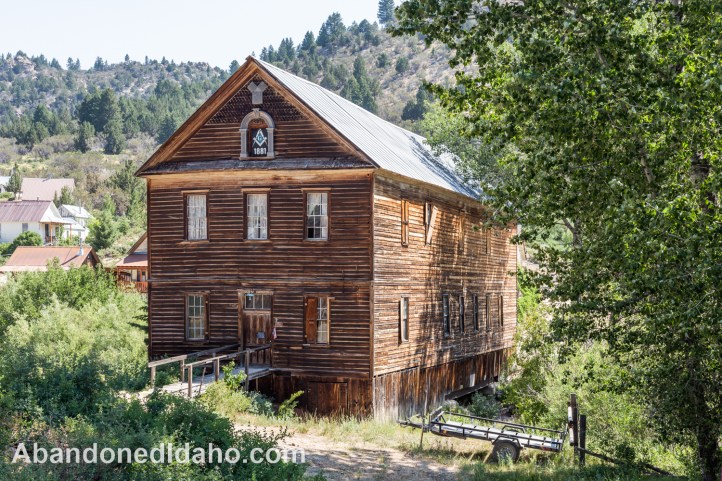
This building was originally built as a water-powered planning mill, which was used for creating cut lumber from logs. It was built over Jordan Creek, possibly used as a water source. Later it was converted to the Masonic Hall in 1881. Dances and other events were held on the second floor.
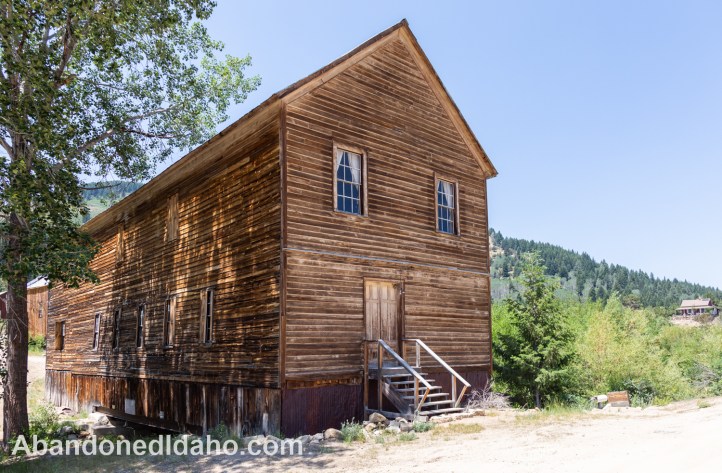
This is the back door of the Masonic Hall. It was a joke among the locals who would enter through the front door and exit from the back door so they could say they “crossed over the Jordan.”
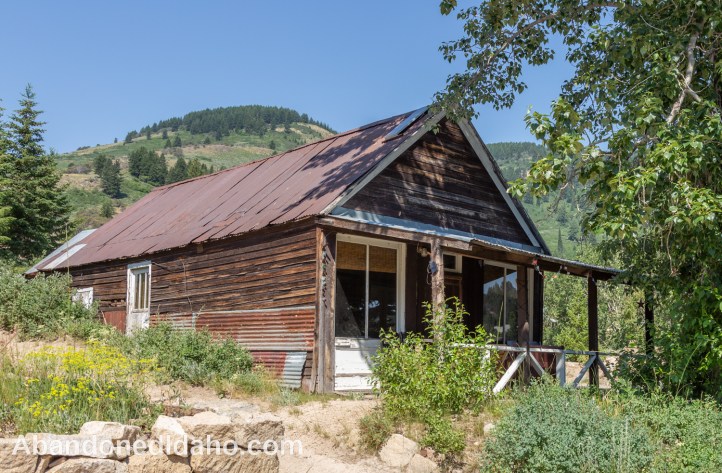
Just uphill from Washington Street sits this private residence, one of a few dozen houses that remain in Silver City. There was once around 300 houses.
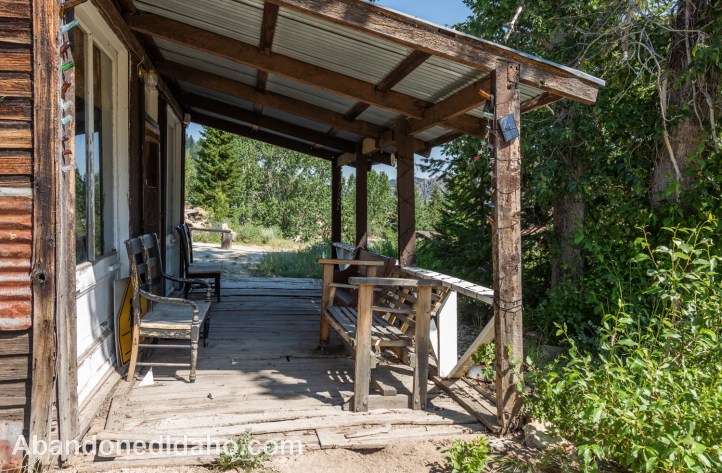
This is the front porch of the house shown in the previous photo. I decided to walk up the side street to get this shot. The street could hardly be considered a street. It was very narrow, steep, covered in loose gravel, and full of ruts. I did not want to risk driving up it with my Jeep. I imagined myself sliding backwards and crashing into one of the other old buildings at the bottom of the hill.
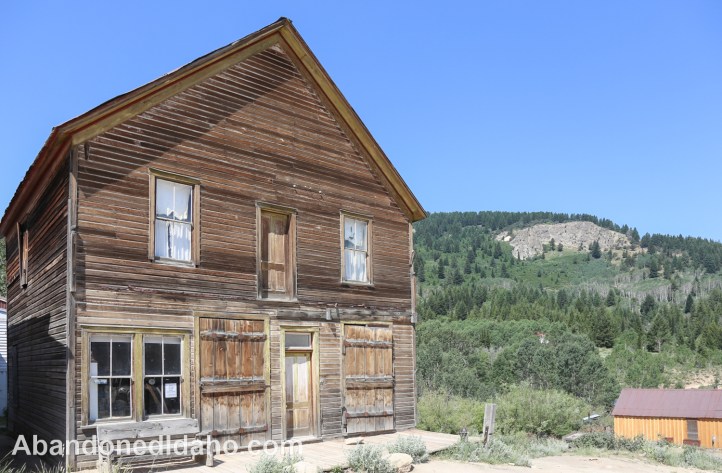
This building had business offices on the first floor and hotel rooms on the second floor. It had a balcony on the upper floor, judging by the doorway to nowhere.
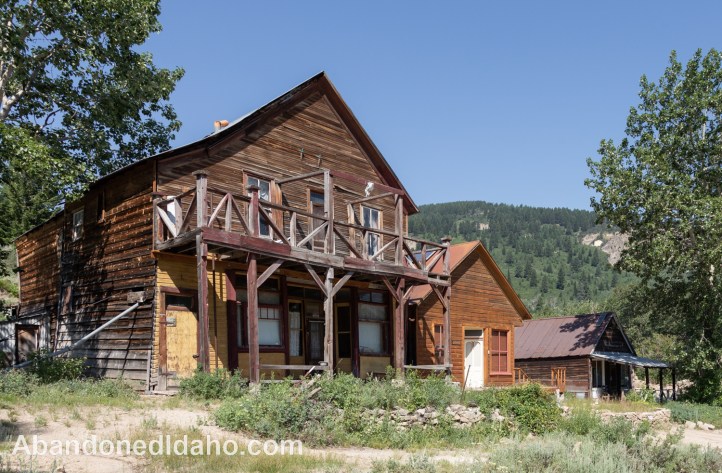
Most of the structures in Silver City have long since vanished, as wood was often salvaged and used for other purposes. The few structures that survived can partially owe their existence to their remote location.
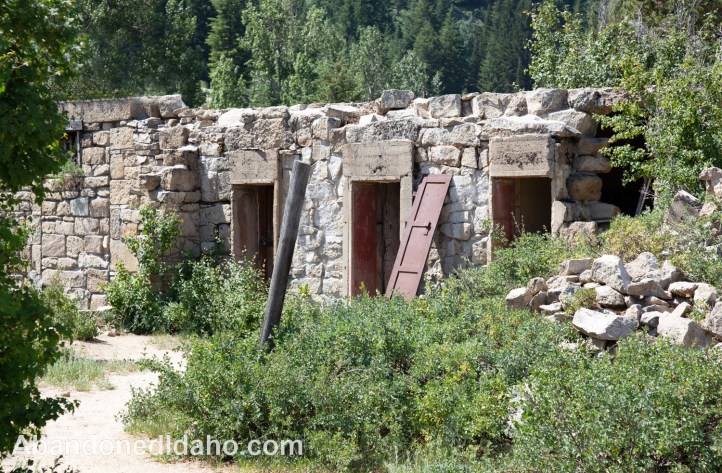
The courthouse was once located here, so most likely these were jail cells. Miners that were arrested during the underground war between Golden Chariot and Ida Elmore probably spent time here, swearing at each other. Despite its violent history, the 250 mines around Silver City were extremely productive. By the late 1860s, annual production from the mines exceeded $1,000,000. The climate around town became more civilized in the 1870s as Silver City now had a courthouse, twelve stamp mills, over seventy businesses, and three hundred homes. The population peaked at around 2,500 residents. Misfortune befell the town again when the silver ore ran out in 1912. This led to the end of mining operations and the eventual death of Silver City. To add insult to injury, in the 1930s, it was cut off the power grid and lost the county seat to the small town of Murphy. By the 1940s, Silver City had only one permanent resident.
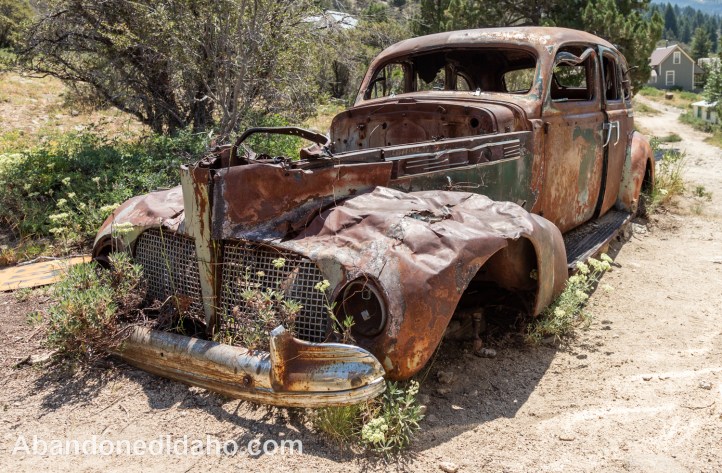
This car has “suicide doors”. Note the placement of the rear door handles. They were hinged at the back, not the front. If they were not properly closed they could catch the wind as the car drove and fly open. The passenger in the back seat would then have to reach out, try to grab the door handle, and swing the door closed. Needless to say, this was very dangerous, and the passenger risked falling out of the car and getting killed, hence the name “suicide door”.
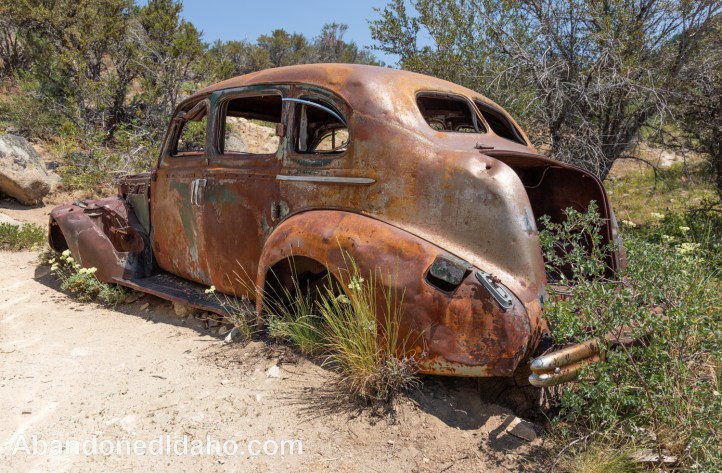
I posted these two photos of this car on several classic car Facebook groups, but nobody was able to positively identify it. Besides that shape of the body, the other clues are the placement of the headlight, tail lights, windows and trim. This car had an indentation in the front left fender for the spare tire. The best anyone could figure out that it was from the early 1940s.
For historical photos see the Silver City Historical Photos blog post.
You can leave a comment by scrolling down to the very bottom of this post to where you see “Leave a comment“. Please subscribe to our blog if you would like to be notified of new posts and/or new comments.

 Abandoned Idaho