The Gold Point Mine and Mill was part of a major mining boom in the Elk City area during the 1930s. This was a really late start compared to other mining booms in Idaho, which began 60 years earlier. Gold was discovered along the Red River, south of Elk City, where several hard rock and placer mines were developed. See the separate post for the Gold Point Mining Camp, which was located close to the mill.
The man primarily responsible for the development and management of Gold Point Mine was Robert White of Seattle. Like many entrepreneurs of his time, he was a strong promoter of gold mining. Originally a logger in Washington State, he yearned for bigger and better things. White generated publicity in local newspapers and even put a 50-lb. chunk of ore on display at the Cottingham Hotel in Elk City. Gold Point Mines was incorporated in 1935, and the company built its mill in 1936. The office was located in Seattle, which was not unusual, as many out-of-state businesses owned and operated mines in Idaho. A local mining engineer reported seeing at least 200 cars with Washington license plates in the various mining districts in the area.
The mill never operated again, for reasons in addition to the broken gear. By 1937, the company had run out of money and could no longer pay its workers. Adding to the difficulties was Robert’s inexperience in mining, the improperly designed mill, extremely high ore shipping costs, and the fact that the mill had been built before enough ore deposits had been located. Even Clarence and his family, who had invested a fortune, feeling dispirited, deserted the place. Everyone left except one man who stayed on as the caretaker of the now-idle property.
By 1938, the company had abandoned its plans to operate the mill and shifted its focus to placer mining with a dredge on the Red River. Placer mining does not require milling, as gold from riverbeds is typically pure and found in the form of flakes or small nuggets, which can be sent directly to smelters. However, the company could not secure the necessary permits from the U.S. Forest Service. Combined with its financial troubles, placer mining operations were put on hold for 20 years. In 1952, Robert developed serious health problems and could no longer run the company. That same year, however, the permits were finally issued, and dredging operations began, but only because the placer claims had been leased to another mining company. Dredging operations lasted until 1958. All photos were taken by Michael Maze, and are used by permission.
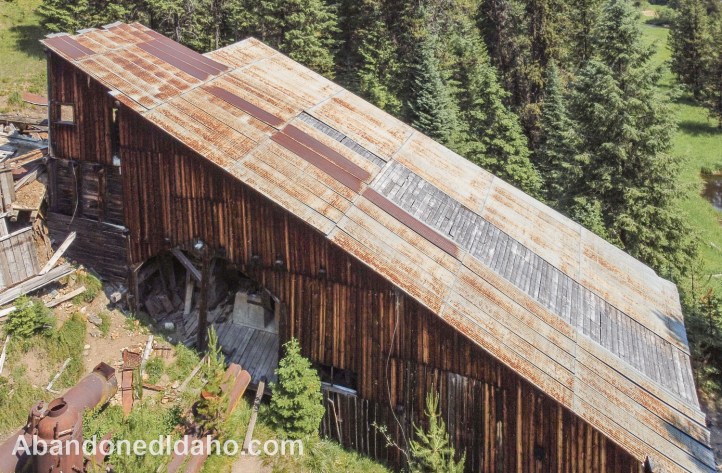
Like almost all processing mills, the Gold Point Company’s mill was built on the side of the mountain. Ore was dumped into the top section and flowed by the force of gravity through the rest of the building’s processing steps.
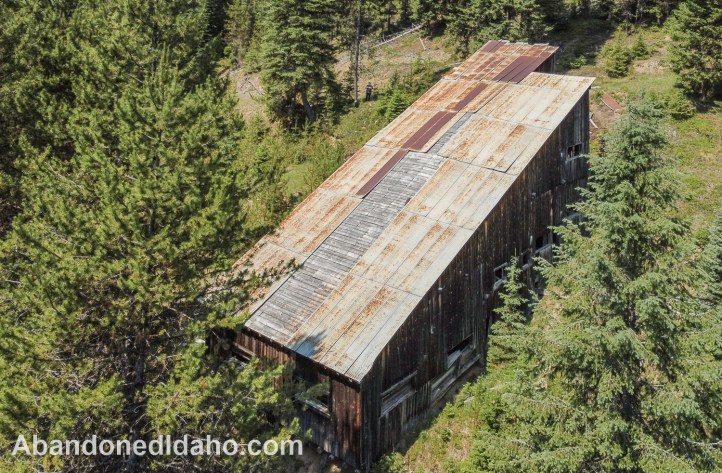
The Gold Point Mill is in relatively good condition compared to other mills that can be found in Idaho. The credit for that should go to Floyd Patrin, who occupied the property as a placer miner from 1957 all the way into the 1990s. That’s perseverance.
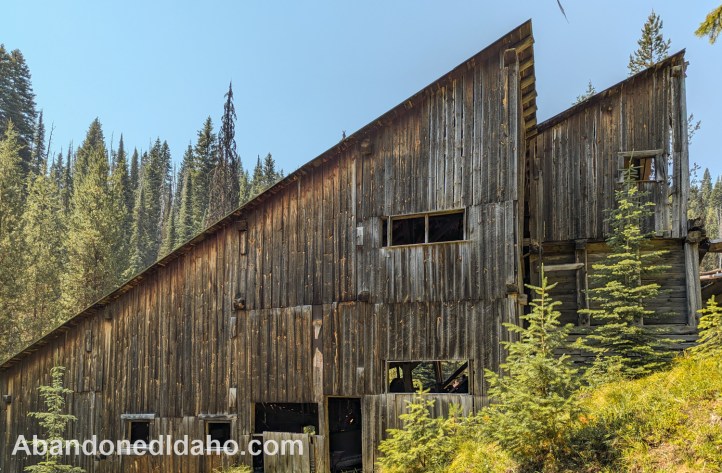
Dump trucks carried the ore from the mines to the mill. Some of the mine tunnels had ore car rails and some were planked. When a tunnel is planked, it means the ore was carried out in wheelbarrows to the mill. In 1936, the mine had only five employees. Interestingly, some of them were apple farmers from Yakima, Washington, who had somehow been lured to work at the mine. Some employees chose to work for stock in the company instead of wages—a decision that proved unwise, as the company was never successful.
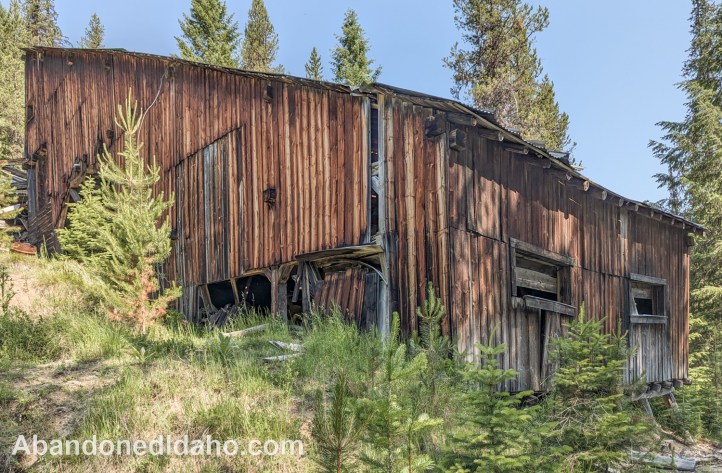
The company eventually acquired twenty-six claims and dug nine tunnels. By 1937 it had ten employees. The plan was to add a mill to their operations because shipping raw ore to distant mills was not economically feasible. The two large openings at the bottom end of the building is where the partially processed ore, known as concentrate, would have been poured into trucks to be taken to the smelters.
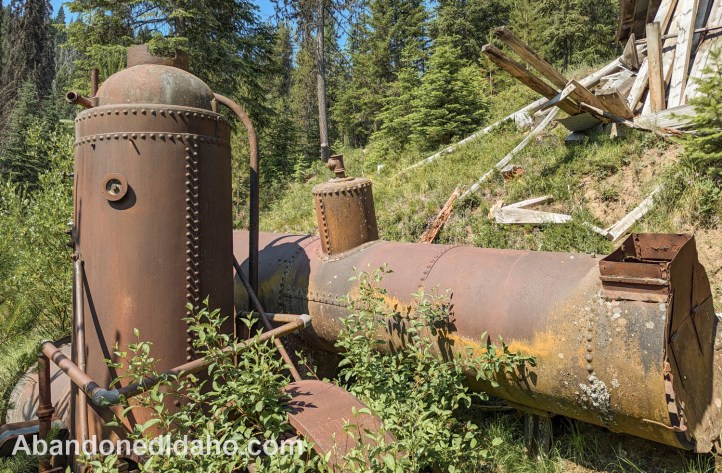
The mill was powered by these two wood-fired steam boilers. In the 1930s most mills ran on diesel engines. Steam boilers were considered outdated even though they were installed in the newly built mill. It is unknown why Robert White chose to use steam boilers instead of diesel engines.
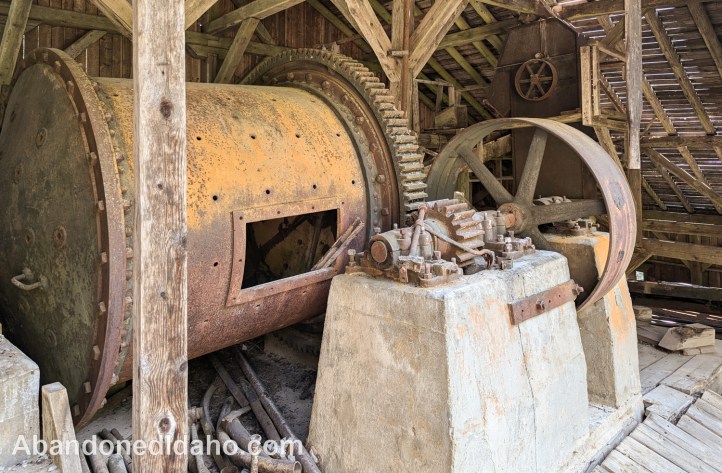
This is the ill-fated 50-ton ball mill. Steel balls inside the rotating drum were usually about 5 inches in diameter, but some ball mills used steel balls of multiple sizes. This ball mill ran for only three days! On the third day a critical gear broke, forcing the operation to shut down for repairs. Some hypothesize that the gear broke because it was improperly installed. Although a replacement gear was ordered, it was never installed. In fact, it is still lying on the ground outside the mill. Inspection of the ball mill years later noted that there was no sign of wear and tear on the moving parts, which supports the idea that it ran for only three days.
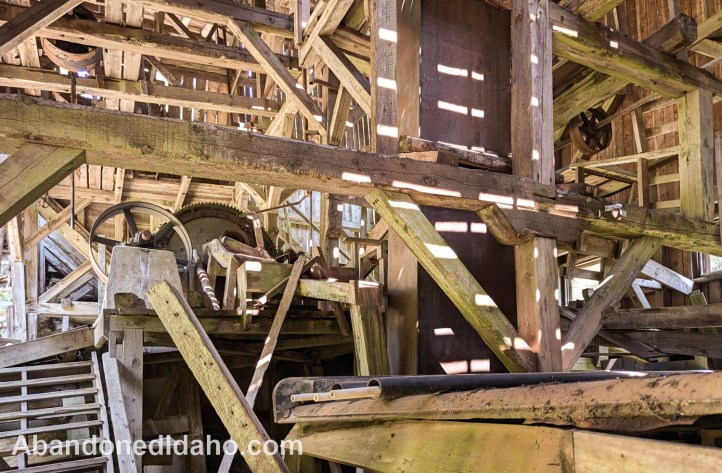
The mill included a jaw crusher, grizzly (a metal grate used to separate out large rocks), ball mill, rake classifier (another type of filter), bucket elevator and two shaker tables (used to separate gold from waste).
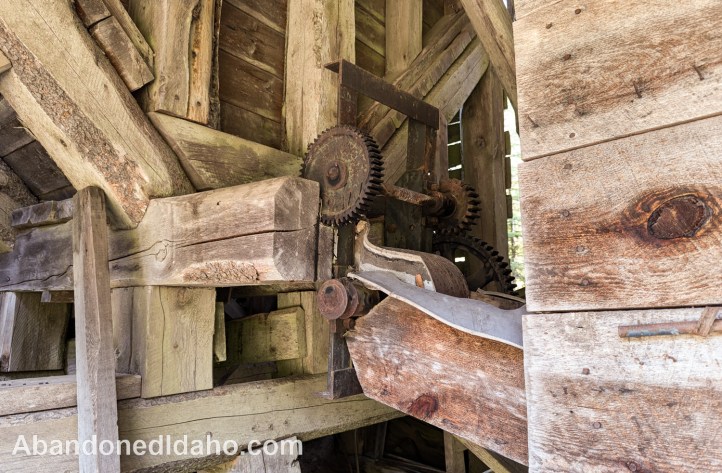
Disregarding the rust and deterioration that has occurred during several decades, mining experts noted that the hopper and chute are barely worn, which also supports the idea that the mill was used for just a very short time.
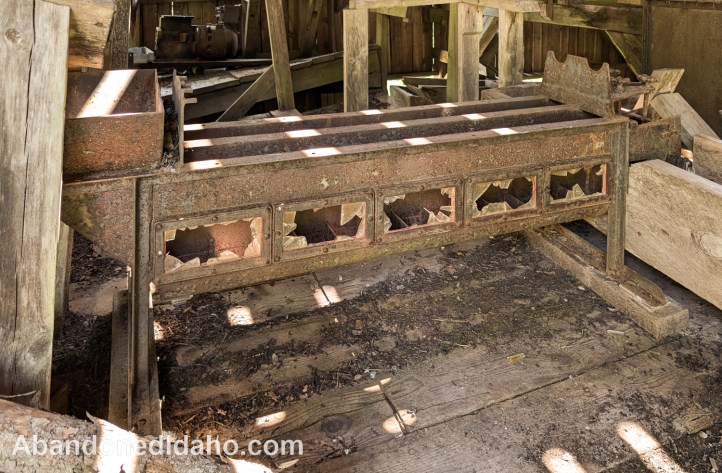
In 1957, some of Gold Point Mill’s placer claims, along with all of its tunnels, buildings, and equipment, were sold to a man named Floyd Patrin for just $1,000. Patrin, a truck driver from Minnesota, apparently dreamed of striking it rich. He and his wife, Elise, took up residence in the cookhouse the following year. Oddly, Floyd was not interested in gold. He was after uranium, spurred by a 1951 report that a dredge had found some uranium ore in the Red River. Unfortunately, no uranium was ever recovered, so instead, Patrin managed a small placer mining operation for several decades. Floyd probably used the equipment in this photo to work with the small amount of gold he was able to recover through his placer mining efforts. Eventually he auctioned off the property and moved back to Minnesota in 1996. The property is now owned by the Elk City Area Alliance, Inc., on behalf of the Idaho Gold Fields Historical Society.
You can leave a comment by scrolling down to the very bottom of this post to where you see “Leave a comment“. Please subscribe to our blog if you would like to be notified of new posts and/or new comments.

 Abandoned Idaho
very interesting article, we love the history of Gold and Silver mines, we are originally from Idaho but for the last 25 years we live in western Montana, i have booked an RV spot at Junction Clear Water Lodge on a full 5 days, second week of July, my husband brother and wife will also be joining us from Washington, we have UTV’s and plan on touring your surrounding area and we’d like to see as many mines as possible, so in looking i found this page on the internet, so would like to have a map if there is one, of the mines and just good history in the area, were really looking forward to this venture, my husbands brother lived there at Junction lodge and worked for the company that paved the highway into Elk City,
LikeLike
I have maps of the abandoned mines in Idaho. I will e-mail them to you later today.
LikeLike