Bayhorse was one of the first ghost towns that I visited in Idaho. It is located at the end of a reasonably well maintained gravel road within the Land of the Yankee Fork State Park. Because it is within the park boundaries, considerable effort has been made to keep the buildings in well-preserved condition (what’s left of them, that is). There are informative signs that explain the purpose of the various buildings when they are known.
By far the most impressive structure in Bayhorse is the the Gilmer and Salisbury Stamp Mill, located right in the middle of town. You cannot go inside, but you can peek through a doorway in one of the upper floors.
In 1889, a fire devastated Bayhorse destroying many important structures. Later that year, mining production suffered due to a shortage of water, which was a crucial element in the milling process. The town’s troubles were compounded by declining silver and lead prices, causing several mines to shut down. Even the smelter ceased operations. This meant ore had to be shipped to distant smelters for processing, which was very costly. By 1897, the smelter was dismantled and removed. As employment opportunities dwindled, miners and townspeople left Bayhorse, knowing the end was coming.
Eventually, the high costs of transporting equipment, food, and supplies to Bayhorse, along with the expense of shipping ore out, made continued operations unsustainable. By 1915, all mining operations around Bayhorse ceased and the town descended to ghost town status.
For decades, Bayhorse lay in a state of decay, its wooden buildings slowly succumbing to the elements. In 2006, the Idaho Department of Parks and Recreation acquired the site as part of the Land of the Yankee Fork State Park. Efforts were undertaken to stabilize and preserve the remaining structures, ensuring that Bayhorse’s history would not be lost to time.
Today, Bayhorse is a protected historical site, so technically it may not be considered “abandoned” by some. It offers visitors a chance to step back into the past. Many of the original buildings still stand, including the assay office, the blacksmith shop, and several cabins. Interpretive signs provide insights into the lives of the miners and their families. All photos were taken by me.
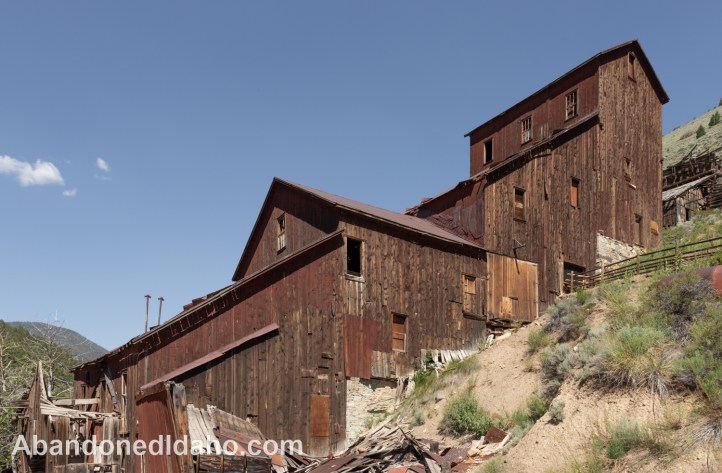
This is the Gilmer and Salisbury stamp mill. Ore was dumped into the upper part of the mill and driven by gravity, it flowed down through various processing stages until it reached the consistency of sand by the time it reached the bottom. Stamp mills operate by crushing the ore underneath heavy metal stamps that are constantly pounding the ore. This stamp mill ran 24 hours a day and reportedly was extremely noisy.
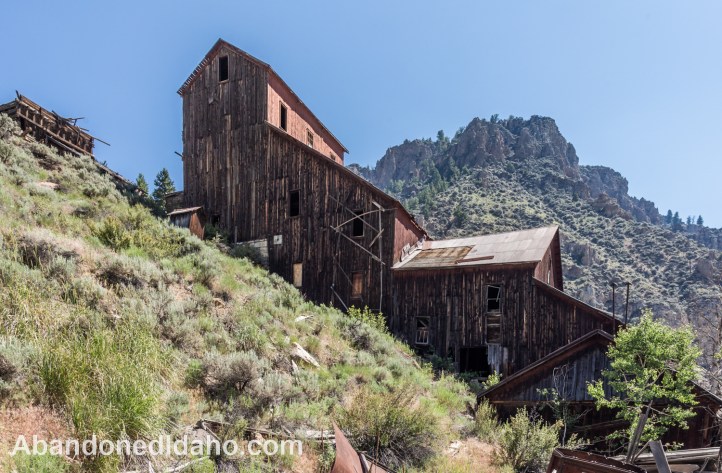
This is the stamp mill as seen from the other side. Most of the lower portion of the structure has collapsed. The remains of a storage bin can be seen in the upper left portion of the photo.
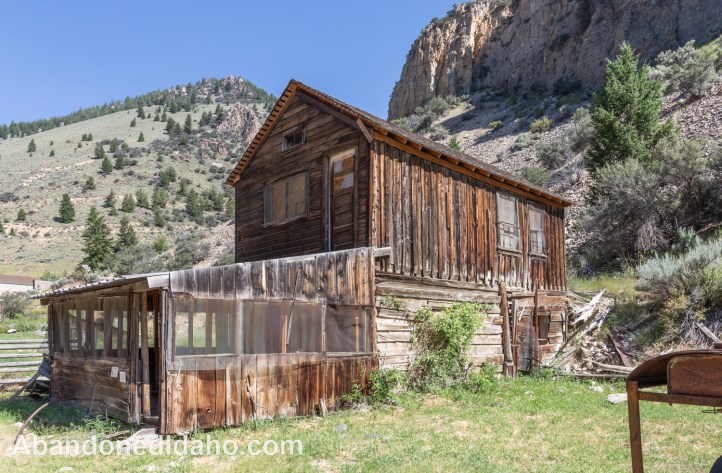
This could have been a saloon with a boarding house on the second floor. The original purpose of some of the remaining buildings in Bayhorse have been lost to obscurity.
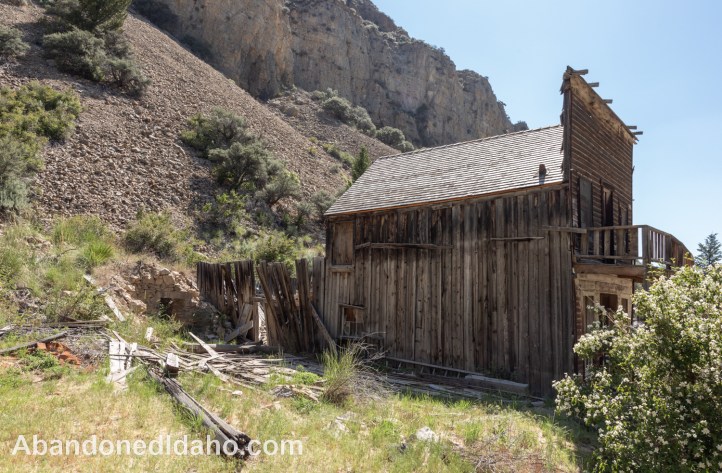
Buildings with a false front were normally businesses. This building likely was one of the town’s hotels, as it has two floors and a second-floor balcony.
The architectural style of Bayhorse reflects the practical needs of a mining town. Most of the buildings were constructed from locally sourced wood, with simple designs that prioritized functionality over aesthetics, to put it mildly.
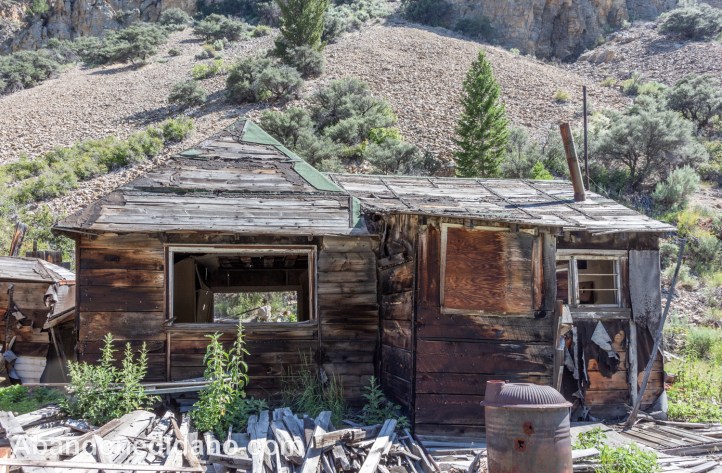
Several people probably lived in this house in the 1880s. Miners did not make much money, so a well-built house like this may have belonged to a business owner or mining official.
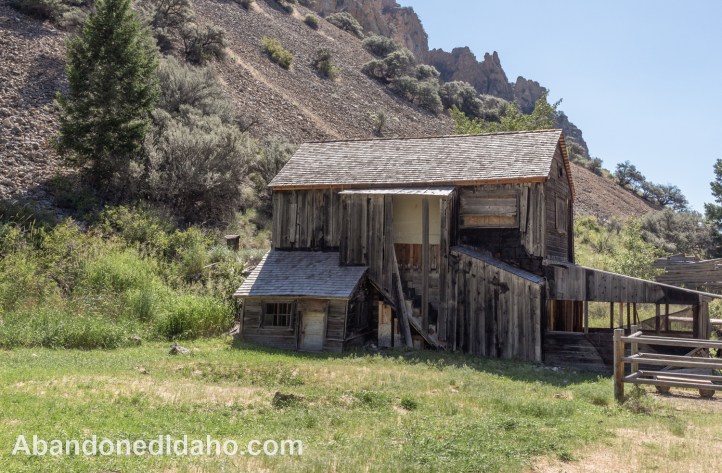
Note the exterior staircase, which allowed men to access their rooms on the second floor without walking through whatever business was on the first floor.
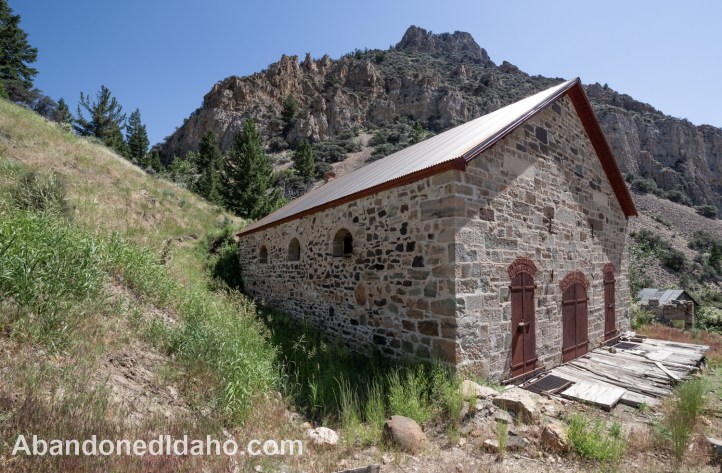
This is known as the Wells Fargo Building, but there is no proof that it was actually used by Wells Fargo. It is a very solid structure built of stone and has hardly deteriorated at all over the past 100 years. It could have been used to store bullion produced by the nearby smelter.
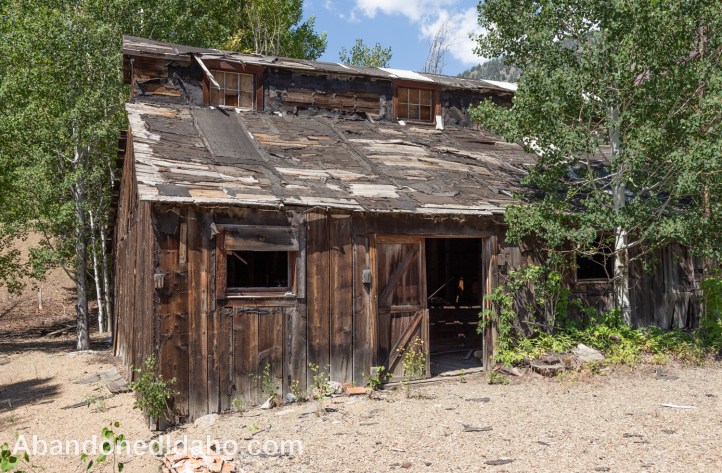
Historians have been unable to determine the purpose of this particular building. It is located next to the site of the long since demolished smelter, so it may have been used in the smelting process. It is common for industrial buildings to have windows near the crest of the roof in order to let in more daylight.
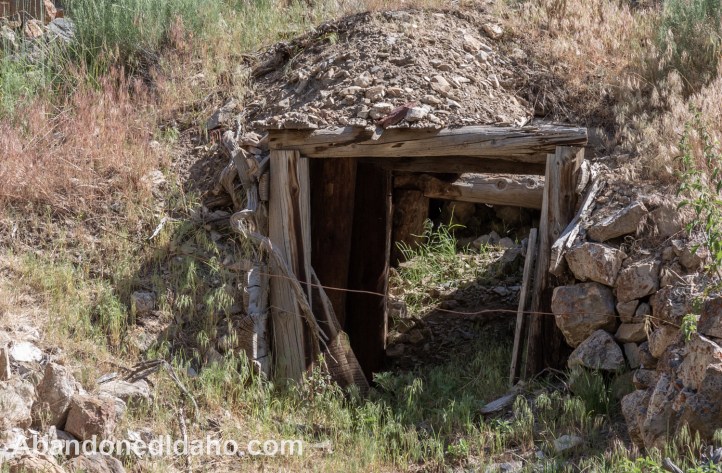
Here we see a mine entrance right in the middle of town. Most of the ore that was processed in the stamp mill came from the Ramshorn and Skylark mines, which were several miles away.
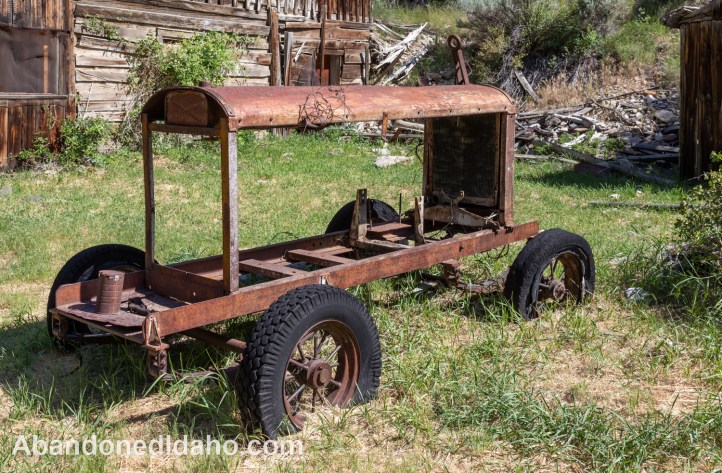
My guess is that this was a tractor. There is a radiator at the far end, and the hood is too long to for it to have been a truck, and the rear wheels look like the are slightly larger than the front wheels. What do you think it was?
Historical photos of Bayhorse can be seen in the Bayhorse Historical Photos post.
You can leave a comment by scrolling down to the very bottom of this post to where you see “Leave a comment“. Please subscribe to our blog if you would like to be notified of new posts and/or new comments.

 Abandoned Idaho